
.etm-recap {
--etm-blue: #173f5f;
--etm-teal: #168b8b;
--etm-light: #f1f6f8;
--etm-text: #34434d;
color: var(--etm-text);
font-family: inherit;
line-height: 1.65;
margin: 55px auto;
padding: 0 30px;
max-width: 1200px;
box-sizing: border-box;
}
.etm-recap *,
.etm-recap *::before,
.etm-recap *::after {
box-sizing: border-box;
}
.etm-recap h2,
.etm-recap h3,
.etm-recap h4 {
color: var(--etm-blue);
line-height: 1.3;
}
.etm-recap h2 {
font-size: 2em;
margin: 0 0 25px;
text-align: center;
}
.etm-recap h3 {
font-size: 1.5em;
margin: 45px 0 22px;
}
.etm-recap h4 {
font-size: 1.08em;
margin: 0 0 8px;
}
.etm-recap p {
margin: 0 0 15px;
}
/* INTRODUCTION */
.etm-recap .etm-intro {
background: var(--etm-light);
border-left: 5px solid var(--etm-teal);
padding: 38px 50px;
border-radius: 5px;
margin-bottom: 40px;
}
.etm-recap .etm-intro p:first-child {
text-align: center;
font-weight: 600;
color: var(--etm-blue);
font-size: 1.15em;
margin-bottom: 20px;
}
.etm-recap .etm-intro p:last-child {
margin-bottom: 0;
}
.etm-recap .etm-intro strong {
color: var(--etm-blue);
}
/* KEY FIGURES */
.etm-recap .etm-stats {
display: grid;
grid-template-columns: repeat(4, 1fr);
gap: 18px;
margin: 30px 0 55px;
}
.etm-recap .etm-stat {
background: var(--etm-blue);
color: white;
text-align: center;
padding: 30px 20px;
border-radius: 5px;
}
.etm-recap .etm-stat strong {
display: block;
font-size: 2em;
line-height: 1.2;
color: white;
}
.etm-recap .etm-stat span {
font-size: .9em;
}
/* SCIENTIFIC SESSIONS */
.etm-recap .etm-sessions-section {
margin: 0 25px 55px;
}
.etm-recap .etm-sessions-section > p {
margin-bottom: 25px;
}
.etm-recap .etm-sessions {
display: grid;
grid-template-columns: repeat(2, 1fr);
gap: 22px;
margin: 25px 0 0;
}
.etm-recap .etm-session {
border: 1px solid #dce5e9;
border-radius: 6px;
padding: 30px 32px;
background: #fff;
box-shadow: 0 2px 8px rgba(23, 63, 95, 0.05);
}
.etm-recap .etm-session h4 {
color: var(--etm-teal);
}
.etm-recap .etm-session p {
font-size: .94em;
margin: 0;
}
/* INVITED SPEAKERS */
.etm-recap .etm-speakers-section {
margin: 0 25px 55px;
}
.etm-recap .etm-speakers-section > p {
margin-bottom: 25px;
}
.etm-recap .etm-speakers {
display: grid;
grid-template-columns: repeat(2, 1fr);
gap: 25px;
margin-top: 25px;
}
.etm-recap .etm-speaker {
background: var(--etm-light);
border-radius: 6px;
padding: 30px;
display: flex;
align-items: flex-start;
gap: 22px;
min-width: 0;
}
/* ROUND SPEAKER PORTRAITS */
.etm-recap .etm-speaker-photo {
width: 105px;
height: 105px;
min-width: 105px;
border-radius: 50%;
object-fit: cover;
object-position: center;
border: 3px solid white;
box-shadow: 0 2px 7px rgba(23, 63, 95, 0.15);
}
.etm-recap .etm-speaker-info {
flex: 1;
min-width: 0;
}
.etm-recap .etm-speaker h4 {
margin-bottom: 5px;
}
.etm-recap .etm-affiliation {
font-size: .88em;
color: #657780;
font-style: italic;
margin-bottom: 12px !important;
}
.etm-recap .etm-speaker-info p:last-child {
font-size: .94em;
margin-bottom: 0;
}
/* THANK YOU */
.etm-recap .etm-thanks {
border-top: 2px solid var(--etm-teal);
padding: 35px 25px 0;
margin-top: 50px;
}
.etm-recap .etm-thanks h3 {
margin-top: 0;
}
.etm-recap a {
color: var(--etm-teal);
font-weight: 600;
text-decoration: underline;
}
/* SAVE THE DATE */
.etm-recap .etm-next {
background: var(--etm-blue);
color: white;
padding: 40px 50px;
border-radius: 6px;
text-align: center;
margin: 40px 0 0;
}
.etm-recap .etm-next h3 {
color: white;
margin: 0 0 15px;
}
.etm-recap .etm-next strong {
color: white;
font-size: 1.4em;
}
.etm-recap .etm-next p:last-child {
margin: 15px 0 0;
}
/* RESPONSIVE DESIGN */
@media (max-width: 900px) {
.etm-recap .etm-speaker {
flex-direction: column;
align-items: center;
text-align: center;
}
.etm-recap .etm-speaker-photo {
margin-bottom: 5px;
}
}
@media (max-width: 700px) {
.etm-recap {
padding: 0 12px;
margin: 35px auto;
}
.etm-recap h2 {
font-size: 1.65em;
}
.etm-recap h3 {
font-size: 1.3em;
margin-top: 35px;
}
.etm-recap .etm-intro {
padding: 25px;
}
.etm-recap .etm-stats {
grid-template-columns: repeat(2, 1fr);
gap: 12px;
margin-bottom: 40px;
}
.etm-recap .etm-stat {
padding: 22px 12px;
}
.etm-recap .etm-sessions-section,
.etm-recap .etm-speakers-section {
margin-left: 5px;
margin-right: 5px;
}
.etm-recap .etm-sessions,
.etm-recap .etm-speakers {
grid-template-columns: 1fr;
gap: 16px;
}
.etm-recap .etm-session,
.etm-recap .etm-speaker {
padding: 25px;
}
.etm-recap .etm-speaker {
flex-direction: column;
align-items: center;
text-align: center;
}
.etm-recap .etm-thanks {
padding: 25px 10px 0;
}
.etm-recap .etm-next {
padding: 30px 22px;
}
}
Another great success for the 5th edition of EcotoxicoMic!
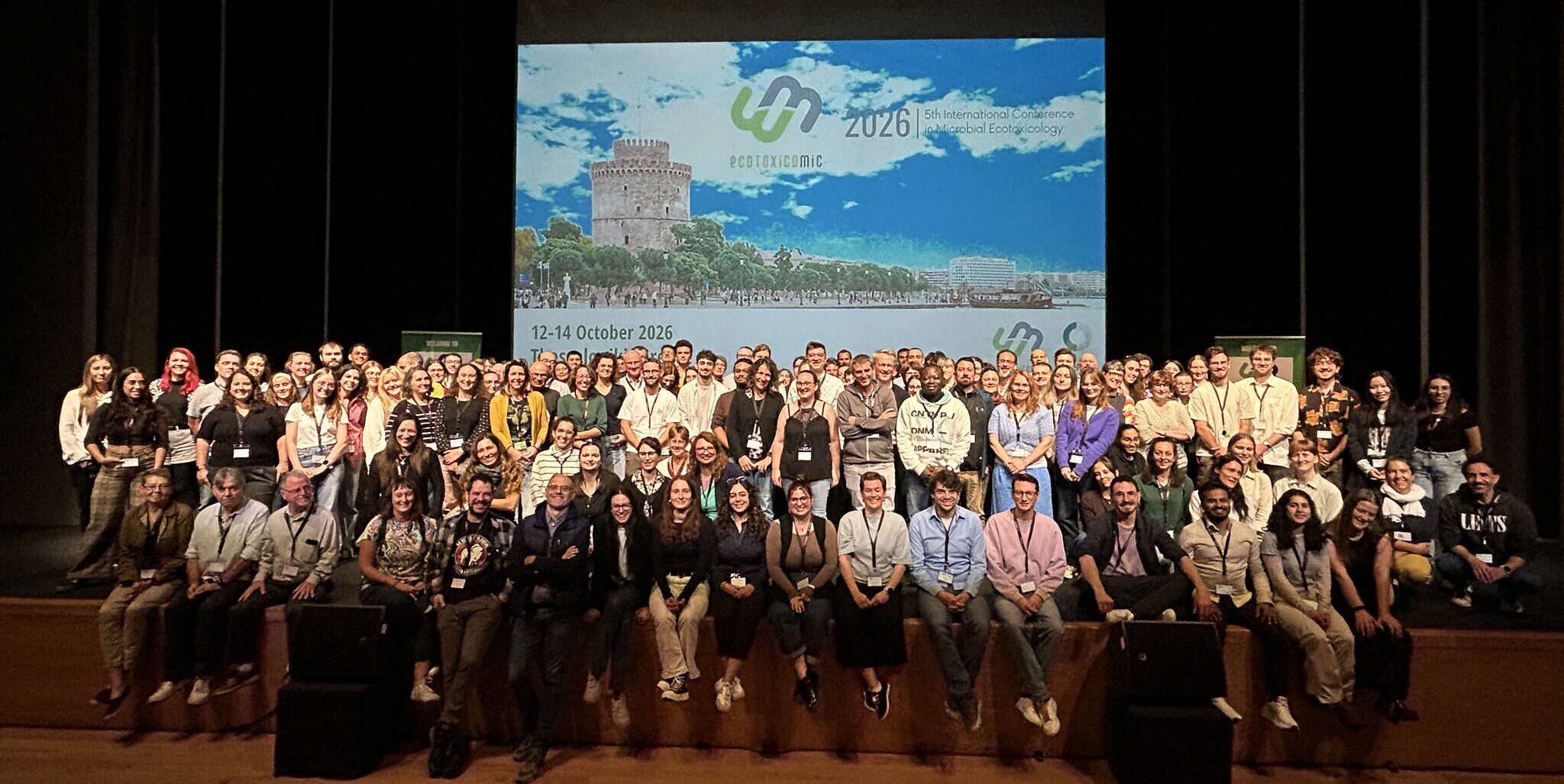
The 5th International Conference in Microbial Ecotoxicology, held in Thessaloniki, Greece, from 12 to 14 October 2026, was another great success!
With 170 participants from 22 countries, over 40 oral presentations, around 100 posters, and outstanding scientific discussions, this edition was once again a fantastic opportunity to share knowledge, foster collaboration, and strengthen our international scientific community.
170
Participants
22
Countries
40+
Oral presentations
~100
Posters
A rich scientific programme covering emerging challenges
Across three days, the conference explored the multiple ways microorganisms interact with environmental contaminants, and how these interactions shape ecosystem functioning, environmental quality and risk assessment. The scientific programme brought together complementary perspectives, from fundamental microbial ecology to applied approaches and regulatory challenges.
Antimicrobial Resistance - An emerging concern with growing consequences
Chairs : Sotirios Vasileiadis, Lise Barthelmebs, Konstantinos Kormas, Francesca Mapelli, Ed Topp
Assessment of the impact of pollutants on microbial diversity and functioning
Chairs : Chloe Bonnineau, Michael Thomas Marx, Stefan Geisen, Natalia Corcoll, Christopher Sweeney
Potential interaction of nature-based solutions (i.e. biopesticides, biological nitrification inhibitors) and natural toxins with environmental microbiomes
Chairs : Evangelia Papadopoulou, Chrysoula Tassou, Kristian Brandt, Edoardo Puglisi
Microbial degradation/detoxification of pollutants and bioremediation applications
Chairs : Stephane Vuillemier, Ines Petric, Evangelos Topakas, Katharine Thompson
Interactions of environmental microbiomes with pollutants under climate change scenarios
Chairs : Michalis Omirou, Mechthild Scmitt-Jansen, Savvas Genitsaris
Microbes, pollutants and Bioprocess Engineering
Chairs : Chrysanthi Pateraki, Spyridos Ntougias, Panagiotis Kougias
Round table : What is new in pesticide regulation regarding effects on the soil microbiota ?
Chairs : Dimitrios Karpouzas, Christopher Sweeney, Fabrice Martin-Laurent,
Download the book of abstracts
Seven outstanding invited speakers
The conference was also enriched by contributions from five invited speakers, whose complementary expertise brought valuable insights into microbial ecology, environmental toxicology and the fate of contaminants.
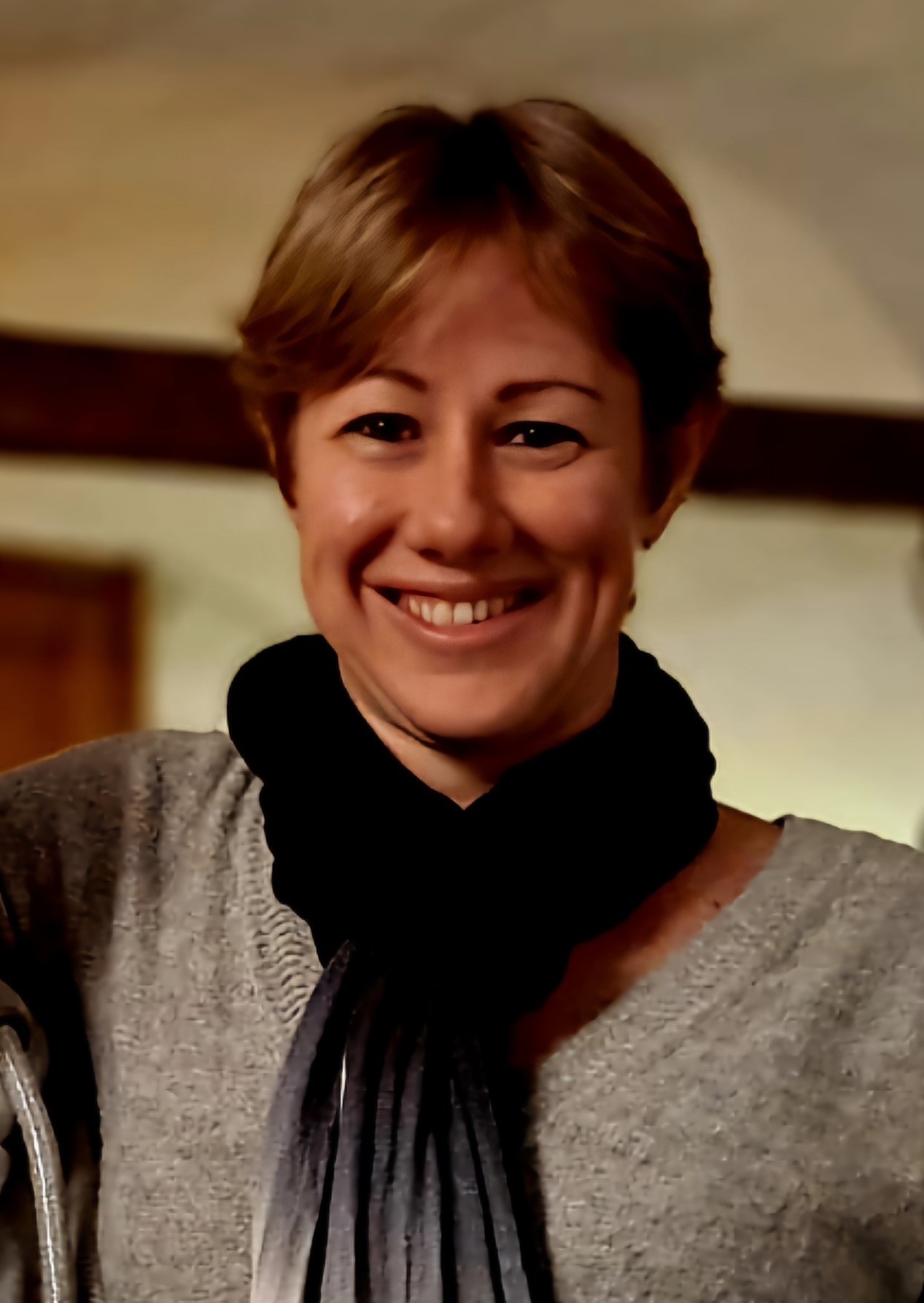
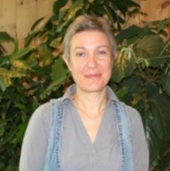
Prof. Joséphine Leflaive
University of Toulouse, France
Her research investigates the resistance and resilience of benthic microbial communities exposed to environmental disturbances and chemical contaminants, considering both community structure and functioning.
Dr. Emilie Muller
CNRS, Strasbourg, France
Her work focuses on the functional ecology and ecophysiology of microbial communities in the Anthropocene, particularly microbial adaptation and the metabolism of legacy and emerging pollutants.
Dr. Paolina Garbeva
Department of Microbial Ecology, Institute of Ecology (NIOO-KNAW), The Netherlands
Her research explores the mechanisms underlying microbial interactions, with a particular focus on microbial volatile compounds and their role in microbe–microbe and plant–microbe relationships.
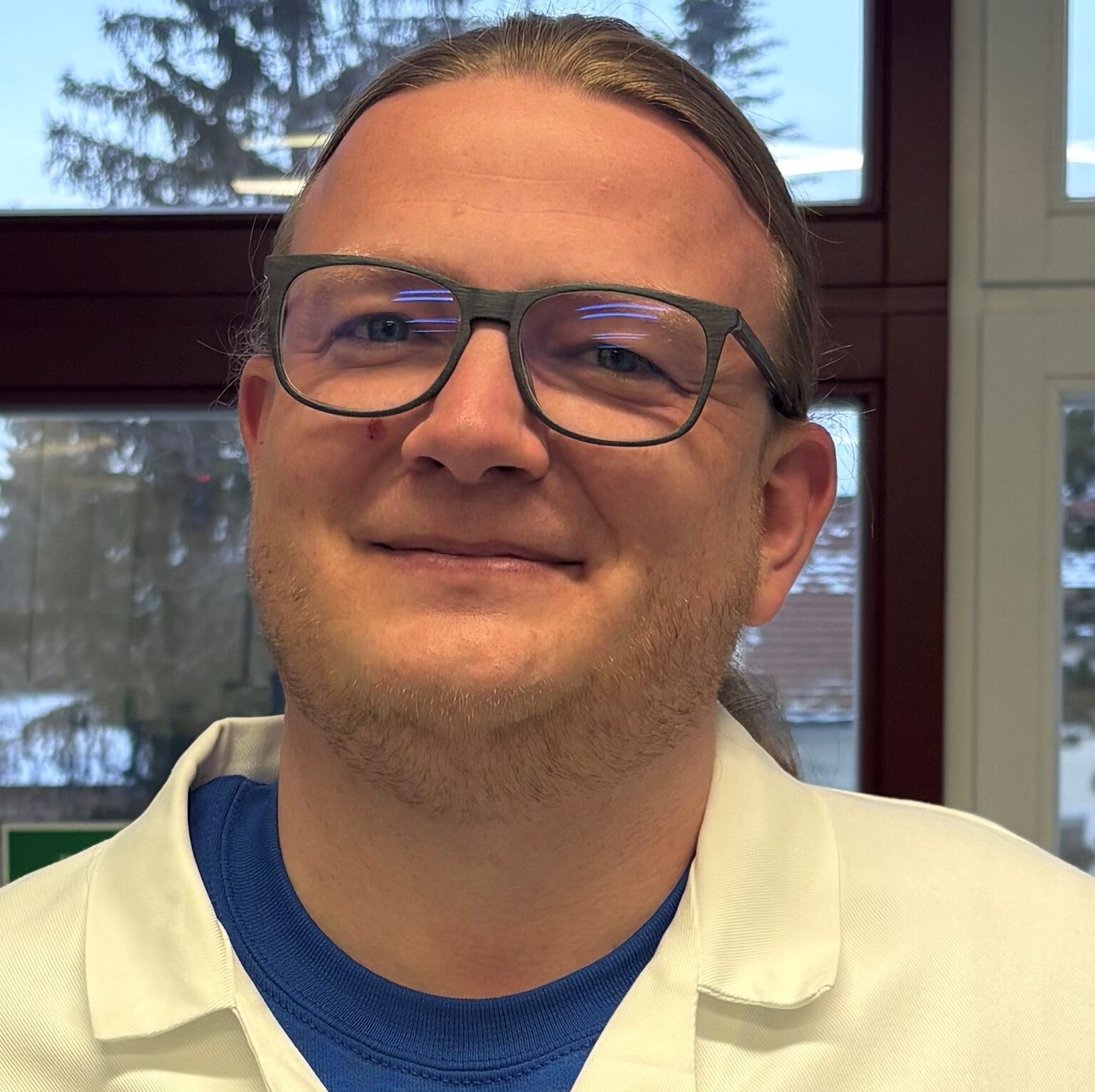
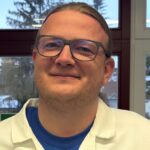
Dr. Uli Klümper
Institute of Hydrobiology, Dresden, Germany
His research explores the ecological and evolutionary processes driving the emergence and spread of antimicrobial resistance in environmental microbial communities, and their implications for environmental risk assessment.
Prof. Dr. Ir. Korneel Rabaey
Department of Biotechnology, Ghent University, Belgium
He is one of the founders of CAPTURE, a centre focusing on resource recovery in the fields of Water, Carbon Capture and Utilization and Plastics to Resource. He is founder of HYDROHM , a company focusing on electrification in the water sector.
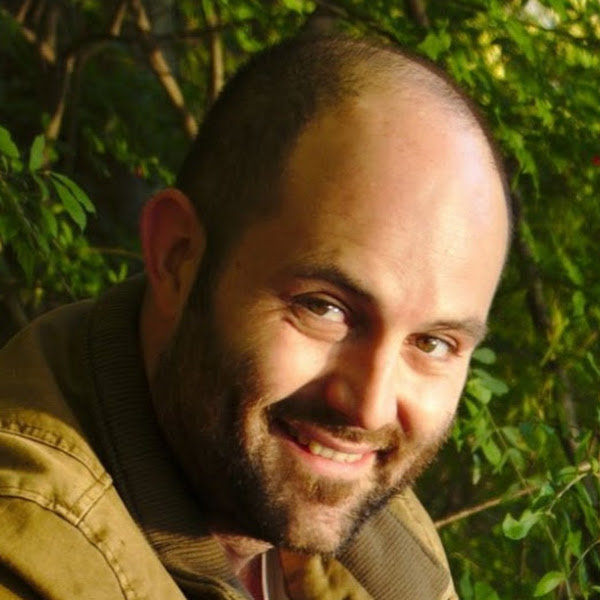
Djordje Bajić
Department of Biotechnology, Delft University of Technology (TU Delft), The Netherlands
His research integrates theory, experiments, and quantitative modelling to uncover fundamental principles of microbial systems.
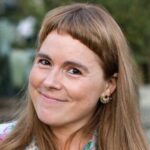
Dr. Victoria Osorio
Institute of Environmental Assessment and Water Research, CSIC, Spain
She investigates the environmental fate, transformation and effects of complex mixtures of organic micropollutants in aquatic systems, combining advanced analytical chemistry and effect-based methods.
A huge thank you to everyone involved!
A huge thank you to all the organizers, speakers, presenters and participants who contributed to making this edition such a success.
Special thanks to Dimitrios Karpouzas and Fondation evertéa for their invaluable support and commitment. 👏
📅 SAVE THE DATE!
The next edition of EcotoxicoMic will take place on
10–12 October 2028 at UFZWe look forward to welcoming you all again for another inspiring scientific gathering!
Dear Colleagues,
On behalf of the University of Thessaly, the EcotoxicoMic Network, and the Fondation evertéa, it is my great pleasure to invite you to participate in the 5th EcotoxicoMic Conference, which will take place in Thessaloniki, Greece  , from 📅 October 12th to 14th, 2026.
🔬 Conference Focus
The 5th EcotoxicoMic Conference comes at a timely moment to highlight the central role of microorganisms in polluted environments — as:
- ♻️ Mediators of pollutant degradation and detoxification, and potential vehicles for ecosystem remediation;
- 🌱 Ecotoxicological indicators revealing pollutant effects on biodiversity and ecosystem functioning, valuable for risk assessment;
- 🧬 Carriers of antibiotic resistance genes, promoting dispersal across environmental compartments within the One Health framework.
🌍 Emerging Topics
This edition will also broaden its scope to explore new and exciting research areas:
- 🌾 Interactions between environmental microbiomes and nature-based or bio-based solutions (e.g., biopesticides, biological nitrification inhibitors, etc.);
- 🏗️ Pollutant–microbiome interactions in engineered environments;
- ☀️ Impacts of climate change on pollutant–microbiome dynamics.
💡 Our Vision
We expect that the Conference will:
- ✨ Inspire new research ideas,
- 🤝 Foster international collaborations, and
- 🌟 Empower young researchers who will lead the next generation of innovation in microbial ecotoxicology.
🧭 Policy and Risk Assessment
Through dedicated round tables, the conference will also emphasize the central role of microbes in environmental risk assessment for regulated chemicals, addressing major policy challenges in this evolving field.
We look forward to welcoming you to Thessaloniki for an inspiring and fruitful scientific exchange.
Best regards,
Dr. Dimitrios G. Karpouzas, On behalf of the Organizing Committee
Conference Chair
Dr Dimitrios G. KARPOUZAS,
Professor in Environmental Microbiology and Biotechnology at the Department of Biochemistry and Biotechnology of the University of Thessaly, Greece
Thursday, October 15, 2026, Morning
Discover the First Results and Advances of the European Pharm-ERA Project (2024–2028)
The Pharm-ERA consortium, funded by the Marie Skłodowska-Curie Actions under Horizon Europe, invites you to a special side event at the EcotoxicoMic 2026 conference. This event, freely open to EcotoxicoMic 2026 attendees, will showcase the project’s first findings and progress in addressing a critical environmental challenge: the contamination of terrestrial and aquatic ecosystems by pharmaceuticals, antimicrobial-resistant microorganisms, and pathogens.

Key Themes Covered:
- Environmental Chemistry & Analytical Methods: Advancing techniques for the detection, quantification, and fate analysis of pharmaceuticals in soil, sediment, and water.
- Environmental Risk Assessment: Integrated approaches to understand the impact of pharmaceuticals and their transformation products on biodiversity and ecosystem health.
- Antimicrobial Resistance: Investigation of resistance spread mechanisms and strategies to limit environmental dissemination.
- Modeling and Sustainable Solutions: Use of predictive models and development of solutions to protect ecosystems, aligned with the European Green Deal and the EU Biodiversity Strategy for 2030.
Why Attend?
- Network with Pharm-ERA researchers and partners.
- Explore potential synergies between your work and the project’s emerging results.
- Contribute to discussions on ecotoxicological challenges related to pharmaceutical and microbial pollution.
Practical Information:
- Date: Thursday, October 15, 2026, Morning
- Venue: Thessaloniki Concert Hall – same place as the EcotoxicoMic 2026 conference
- Registration is free but mandatory in the limit of 60 seats (see Regitration options)
Prof. Joséphine Leflaive
Department of Biology and Geosciences, University of Toulouse
Dr. Emilie Muller
Molecular genetics, genomics and microbiology - CNRS
Dr. Victoria Osorio
Institute of Environmental Assessment and Water Research, CSIC
Dr. Serina L. Robinson
Swiss Federal Institute of Aquatic Science and Technology (Eawag)
Dr. Uli Klümper
Institute of Hydrobiology, Dresden